
Custom Drapery in Natick, MA
Browse our favorite fabric collections and find the perfect finishing touch for your home. Whether you're updating custom drapes, reupholstering a favorite chair, or adding decorative accents, the right fabric can bring comfort, color, and personality to any space.
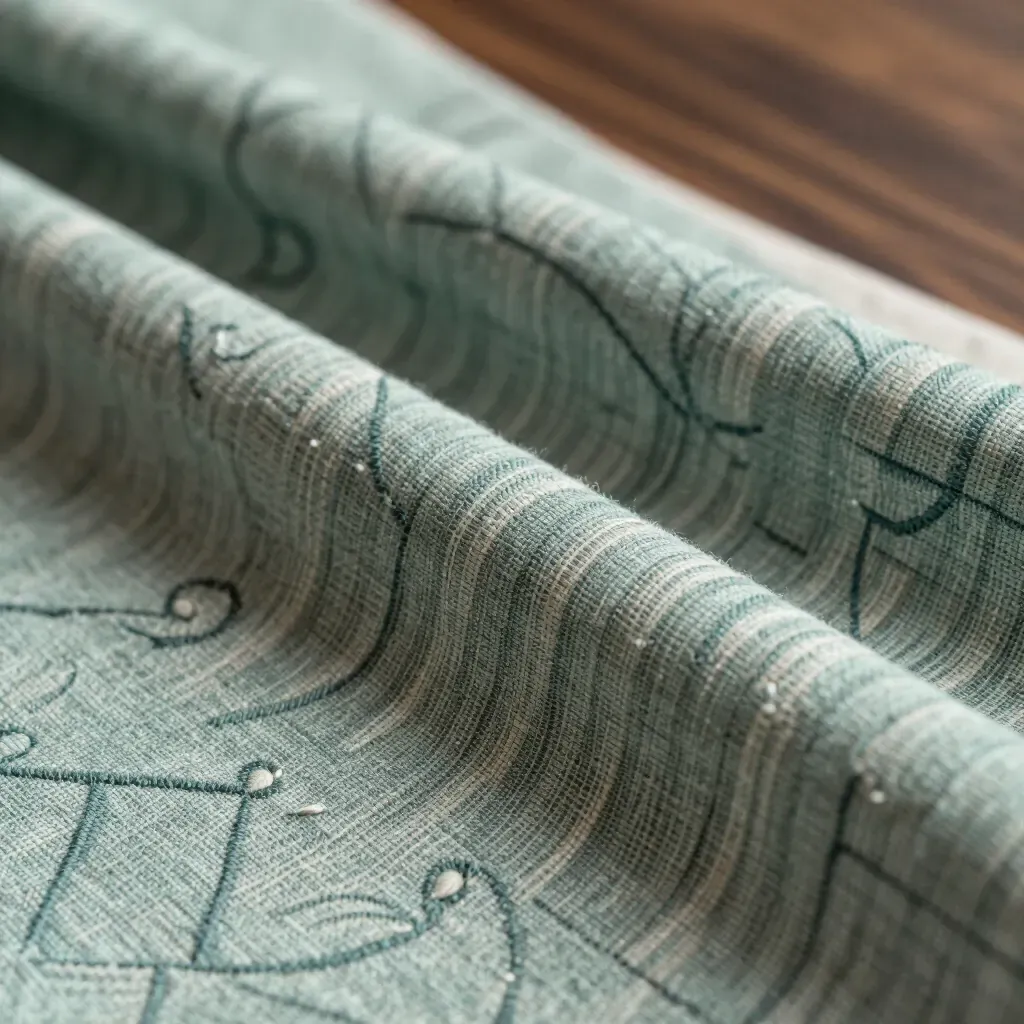
Our Fabric Brands
We partner with trusted fabric manufacturers to ensure unparalleled quality for your home.
Anna French
Carole
Clarke & Clarke
Close & Sons
Fabricut
Kravet
Maxwell
Morris & Co.
Sancar
Sanderson
Schumacher
Stout
Thibaut
And More!
Custom drapery in Natick, MA, chosen with the fabric in your hands
Welcome. If you are thinking about curtains or drapes for a room, we would like to help you get them right. We offer custom drapery in Natick, MA, from our design center in Natick Center: you choose the fabric from the books and samples in the showroom, we measure your windows, and each panel is made to measure and lined for the window it will hang on.
Drapery is the most personal of the window treatments. The same window can look formal, relaxed, bright or cosy depending on the fabric, the way it is pleated and where the rod is placed. That is why we start with the fabric itself and work outward to the window.
The fabric houses behind our drapery
The names listed above are the fabric houses whose collections we work from, and they cover a very wide range, from plain linens and textured weaves to large-scale prints and traditional patterns. Kravet, Thibaut and Schumacher are among the names people most often ask about, and their books sit alongside the rest in the showroom.
Several of these houses also make wallpaper, and we carry wallpaper from many of them, including Anna French, Clarke & Clarke, Fabricut, Kravet, Morris & Co, Sanderson, Schumacher and Thibaut. That makes it possible to choose a fabric and a paper that were designed to sit together, or simply to see them side by side before you commit. Our wallpaper page lists the wallpaper brands.
Choosing a fabric for drapery
A fabric that looks lovely on a sample card does not always hang well as a full-length panel. A few things are worth weighing before you fall for a pattern.
Weight and drape
Heavier fabrics fall in deep, steady folds and block more light and draught. Lighter fabrics move and glow when the sun is behind them. The right weight depends on whether the drapery is there to close, or mainly to frame the window.
Fiber
Linen has a relaxed, natural look and creases softly. Cotton is versatile and easy to live with. Velvet is rich and heavy and makes a room feel warmer. Sheers let light through and soften the view. Each behaves differently in sun and damp, and we will tell you what to expect.
Pattern and scale
A large pattern needs width to show itself, so it suits wide windows and full panels. A small pattern or a texture reads almost as a plain color from across the room. Pattern repeats also matter when panels are joined, so the design lines up across the seam.
Color in daylight
Fabric changes color with the light. A shade that looks warm in the showroom can look cooler on a north-facing window. Taking a sample home, or seeing it at a consultation, is the surest test.
Sun and fading
Strong, direct sun fades most fabrics in time, and some fibers and dyes fade faster than others. A lining protects the face fabric, and a blind behind the drapery takes the worst of the sun.
Linings, and why they matter
The lining is the part of a drape nobody chooses for its looks, and it makes more difference than almost anything else. A lining gives the panel body, so it hangs in even folds instead of clinging or twisting. It protects the face fabric from sun. It makes the window look the same from the street whatever the fabric is on the inside.
Different linings do different jobs. A standard lining adds body and protects the fabric while still letting some light through. A blackout lining stops most of the light, which is what you want in a bedroom. An interlining, a soft layer between the face fabric and the lining, gives a full, padded look and helps a room hold its warmth. We will talk through which suits each window and each fabric, because a heavy lining under a fine fabric changes the way it falls.
Headings, length and fullness
The heading is the way the top of the panel is finished, and it sets the character of the drapery. Pleated headings gather the fabric into regular folds and look tailored. Flatter, wave-like headings look cleaner and more modern. Gathered headings feel softer and more relaxed. We will show you how your fabric looks in the headings that suit it.
Length changes the room too. Panels that just touch the floor look crisp and tailored. Panels that break slightly on the floor look softer. A short panel that stops at the sill suits a window above a radiator or a window seat.
Fullness is how much fabric goes into each panel compared with the width it covers. More fullness gives deeper folds and a richer look when the drapery is closed. Less fullness looks lighter and lets the pattern show more clearly.
Sheers and layered drapery
Sheers are the lightest drapery of all. They soften daylight, blur the view in from the street and make a room feel calm without darkening it. On their own, they suit rooms where you want light and a little privacy, such as a living room that faces a quiet garden.
Layering a sheer behind a lined panel gives you both: the sheer stays drawn through the day, and the heavier panel closes in the evening. Each layer needs its own rod or track, so the plan has to allow for the depth of both at the top of the window. We can show you sheers alongside the main fabric, so the two are chosen to sit well together.
Drapery room by room
Each room asks something different of its drapery.
- Living rooms. Usually the room where drapery is most about the look. Full-length panels in a fabric that suits the furniture, often over a blind that handles the light.
- Bedrooms. Darkness and quiet matter most. A blackout lining, panels that overlap in the middle and hardware that returns to the wall stop light leaking round the edges.
- Dining rooms. Drapery here is often the main source of color and pattern in the room, and is closed less often, so it can be dressed for show.
- Kitchens and bathrooms. Damp, steam and cooking are hard on most fabrics. A short panel in a washable fabric, or a shade, is the practical choice.
- Home offices. Glare is the problem. A light-filtering sheer or lining cuts it without shutting out the day.
- Children’s rooms. A sturdy, easy-care fabric and a blackout lining help with early nights and light summer mornings.
Caring for your drapery
A little care keeps drapery looking right for a long time. Vacuum lightly with a soft brush now and then, working from the top down, to keep dust out of the weave. Open and close panels by hand at the leading edge, or with a baton, so the fabric is not pulled from the heading. Keep panels clear of radiators and of anything that drips. Most lined drapery should not go in a washing machine; check the care guidance for your fabric and ask us before cleaning anything you are unsure about.
Natick windows and the drapery they suit
Natick’s housing gives drapery very different windows to work with, often within a short walk of the showroom.
Victorians and two-families near the common
The Victorians and two-families around the common in Natick Center often have tall sash windows and high ceilings, which suit long, full panels hung well above the window. Placing the rod higher than the frame and wider than the glass makes a window look larger and lets the panels clear the glass when they are open. Bay windows are common in this housing, and a bay needs hardware that follows its angles, so the drapery can draw smoothly around it.
Post-war capes and ranches toward Lake Cochituate
Further out, toward Lake Cochituate, the post-war capes and ranches bring lower ceilings, dormer windows and wide picture windows and sliders. In a cape, a lighter fabric and a simple heading keep a smaller room from feeling crowded, and dormer windows often suit short panels or a shade more than full-length drapery. On a ranch’s wide window or slider, panels need room to stack back clear of the glass, so the view and the door are left open when the drapery is drawn back. Big glass also brings strong light, which is where a good lining earns its place.
How the process runs, from showroom to installation
- Choose the fabric. Come into the showroom in Natick Center to look through the books and handle the samples. You are welcome to walk in without an appointment. If you prefer, book a free in-home consultation and we bring samples to your home.
- Plan the window. We talk through the room, the light, the heading, the length, the lining and the hardware, so you know how the finished drapery will look and work.
- Measure. We measure every window ourselves, including where the rod or track will go, so the panels are made for your window and not an estimate of it.
- Make to measure. Your drapery is made to those measurements, in your fabric, with the lining and heading you chose.
- Install. Our team installs the hardware and hangs the drapery on the windows we measured.
If you are choosing drapery for several rooms, there is no need to decide everything at once. Many people start with the main living space and come back for the bedrooms.
Drop in and look through the books
Fabric is hard to choose from a screen. Texture, weight and the way a weave catches the light only really show when you hold it. Because the showroom is right here in Natick Center, you can drop in without booking, sit down with the sample books and take your time. Bring a cushion, a paint chip, a photo of the room or a scrap of the wallpaper you already have, and we can put fabrics beside it straight away. If something catches your eye, ask about taking a sample home to see it in your own light before you decide.
Hardware and how panels hang
The rod or track is part of the look, not an afterthought. A decorative rod with rings shows at the top of the window and becomes part of the design. A track hidden behind the heading lets the fabric take all the attention and often draws more smoothly, which matters on wide windows and on drapery you open and close every day.
Where the hardware goes matters as much as what it is. Mounting it higher than the frame makes the ceiling feel higher. Extending it past the sides of the window lets the panels stack on the wall instead of over the glass. On a window you rarely close, panels can be fixed in place to frame it, with a blind or shade doing the daily work behind them.
What shapes the cost of custom drapery
Every custom drapery project is priced for its own windows and fabric, so we do not publish prices. The things that shape the cost are the fabric you choose, how much of it the panels need (which depends on the width, length and fullness), the lining, the heading, and the hardware. Our page on custom drapery cost explains each of those in more detail, and we are happy to talk through options that suit your budget when you come in or at a consultation.
Where drapery fits with the other lines
Drapery rarely stands alone. Because we also carry blinds, wallpaper, Benjamin Moore paint and flooring, you can plan the whole window and the room around it in one place.
- Drapery over blinds. A blind or shade handles light and privacy through the day, and drapery adds softness, warmth and a finished frame. Our custom blinds page covers the Hunter Douglas blinds and shades that often sit behind drapery.
- The full range of window treatments. If you are still weighing up drapery against shades or shutters, our window treatments page sets out every option.
- Wallpaper and paint. Choosing a fabric next to wallpaper samples or Benjamin Moore paint colors avoids a clash once everything is in the room. Our page on coordinating paint, wallpaper and window treatments shows how to put them together.
- Floors. Floor-length drapery meets the floor, so if new flooring is part of the plan, it is worth choosing the two side by side.
Custom drapery beyond Natick
Natick is home, and we also measure and install custom drapery in the towns around it. There are dedicated pages for custom drapery in Wellesley and custom drapery in Newton, and our service areas page lists the towns we visit.
Questions about custom drapery
Which fabric brands do you carry for drapery?
The houses listed on this page, including Kravet, Thibaut, Schumacher, Sanderson, Clarke & Clarke and Morris & Co, among others. Come into the showroom to look through the books.
Can I see fabrics before I decide?
Yes. You can look through the samples in the showroom in Natick Center, or book a free in-home consultation and we bring samples to your home so you can see them against your own walls and in your own light.
Do you measure and install the drapery?
Yes. Professional measurement and installation are part of the service. We measure every window ourselves and install the hardware and the drapery.
Should my drapery be lined?
Almost always. A lining helps the panels hang well, protects the fabric from sun and makes the windows look consistent from outside. A blackout lining suits bedrooms, and an interlining gives a fuller look and extra warmth.
Can drapery go over blinds or shades?
Yes, and it often works best that way. The blind or shade does the daily job of controlling light and privacy, and the drapery frames the window. We can plan both together.
How much does custom drapery cost?
It depends on the fabric, the size of the windows, the lining, the heading and the hardware, so every project is priced for its own windows. Our custom drapery cost page explains what shapes the price, and we can talk through options with you.
Visit the showroom or book a consultation
The best place to start with drapery is with the fabric itself. Stop into the showroom in Natick Center to look through the books, or get in touch through our contact page to book a free in-home consultation. The call button reaches us as well. Tell us about the room and the windows, and we will help you from there.