
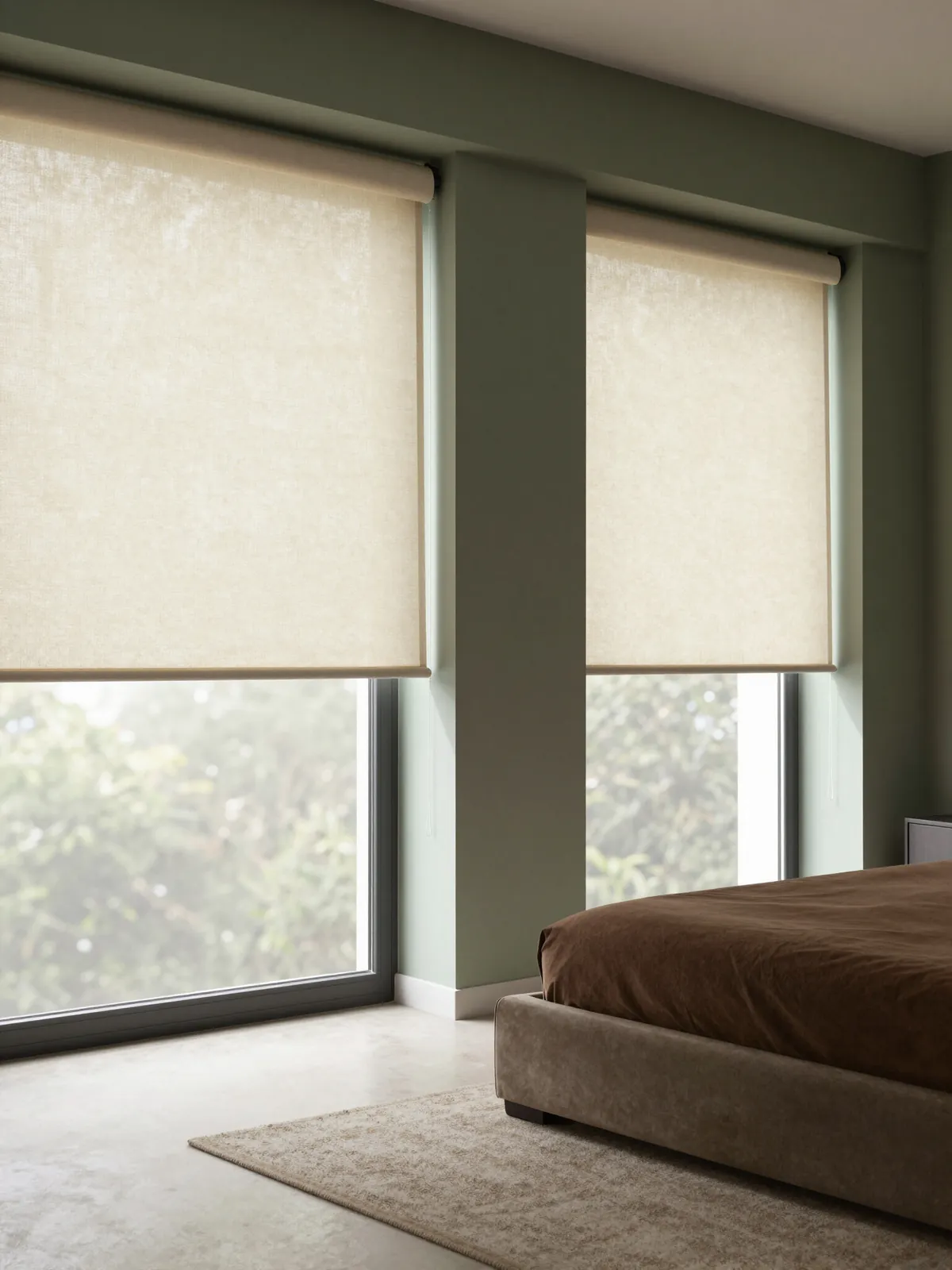
Bay windows, tall sashes and the blinds that hang in them
If a blind or shade in your house has stopped working, we can help you find out what has gone and what to do next. Blind and shade repair in Newton, MA has its own character, because of what Newton’s houses are like. From Auburndale and Waban to Chestnut Hill, Newton Highlands, Newtonville, West Newton, Newton Centre and the villages in between, a great many of the houses are Victorians or large colonials, built with generous windows.
Two features come up again and again: tall sashes and bay windows. Both are hard on the hardware inside a blind, and both make a repair more worthwhile than it would be on an ordinary stock-size window.
Long drops carry more weight
A blind made for a tall Victorian sash is longer and heavier than one for a modern window. Every time it is raised, the lift cords and the cord lock take that weight. Over years of daily use the cords thin where they turn over the edge of the headrail, and the lock teeth that grip them start to wear smooth. The usual result is a blind that will not stay up, or one that drops a little on one side so the bottom rail hangs at an angle.
A bay is a set, not a single window
A bay holds several blinds or shades side by side, set at angles to each other, usually bought and hung together. They are meant to line up: the same height, the same colour, the slats tilting together. When one fails, the bay looks wrong even if the others are fine. That makes the question different from a single window. It is not only whether the broken one can be fixed, but whether the fixed one will still sit properly with the rest.
Why custom sizing changes the sums
Because these openings rarely match a stock size, the blinds in them were usually made to measure. That is good news for a repair. A made-to-measure blind with sound slats or fabric is worth keeping, and replacing the part that failed often makes far more sense than replacing the whole thing.
Where a blind or shade usually gives out
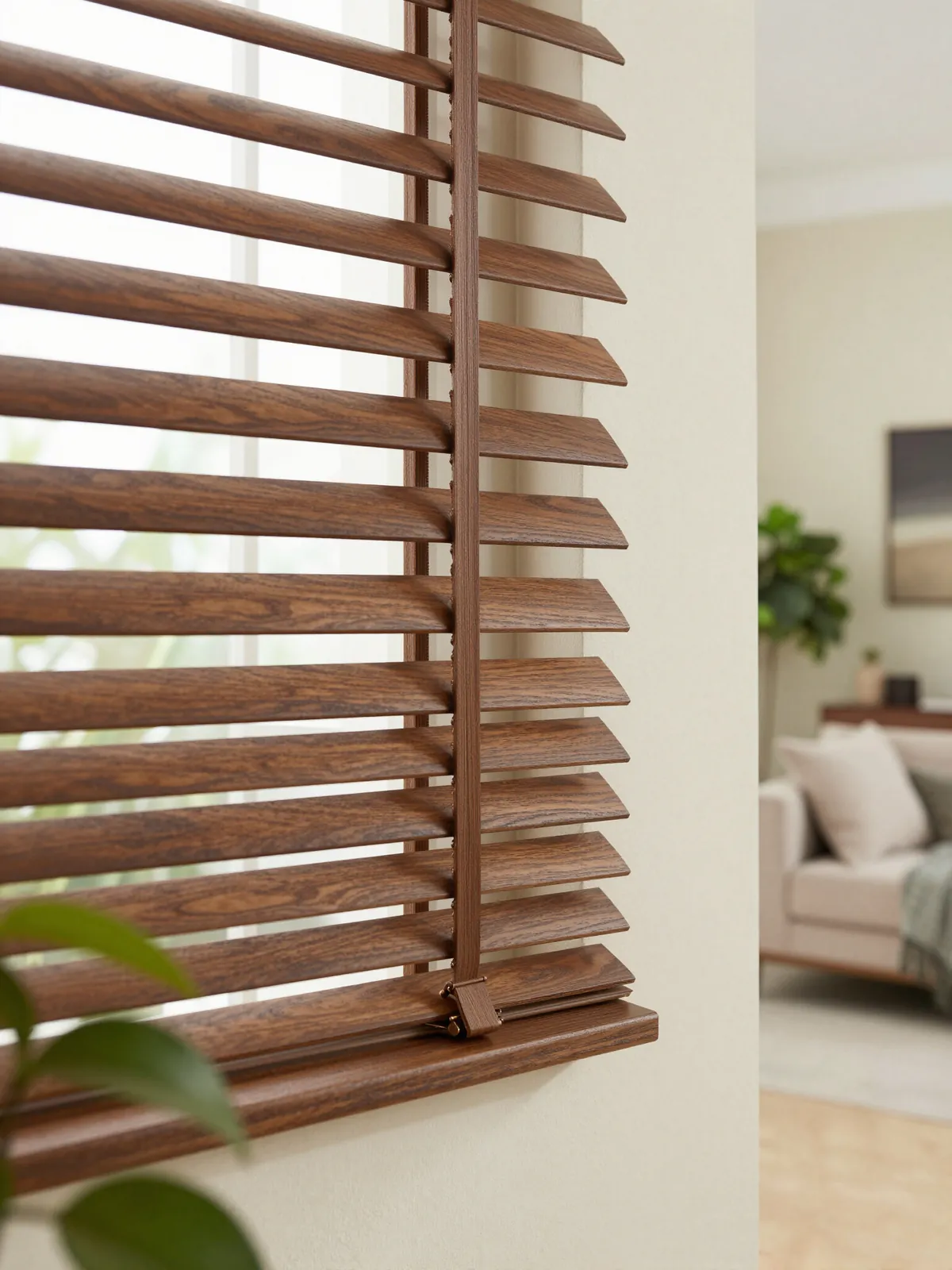
Lift cords under a heavy load
On long blinds the cords carry the most strain. Thinning, fraying or a broken cord are the classic faults, and they tend to show first on the window you use every day.

Cord locks that no longer grip
When a blind creeps down after you lock it, the lock is often worn rather than the cord. It is a small part with a big job on a heavy blind.

Ladders, slats and tilt
The woven ladders that hold the slats, and the gear the wand turns, wear with age. Slats that hang unevenly or will not close fully usually trace back to one of the two.
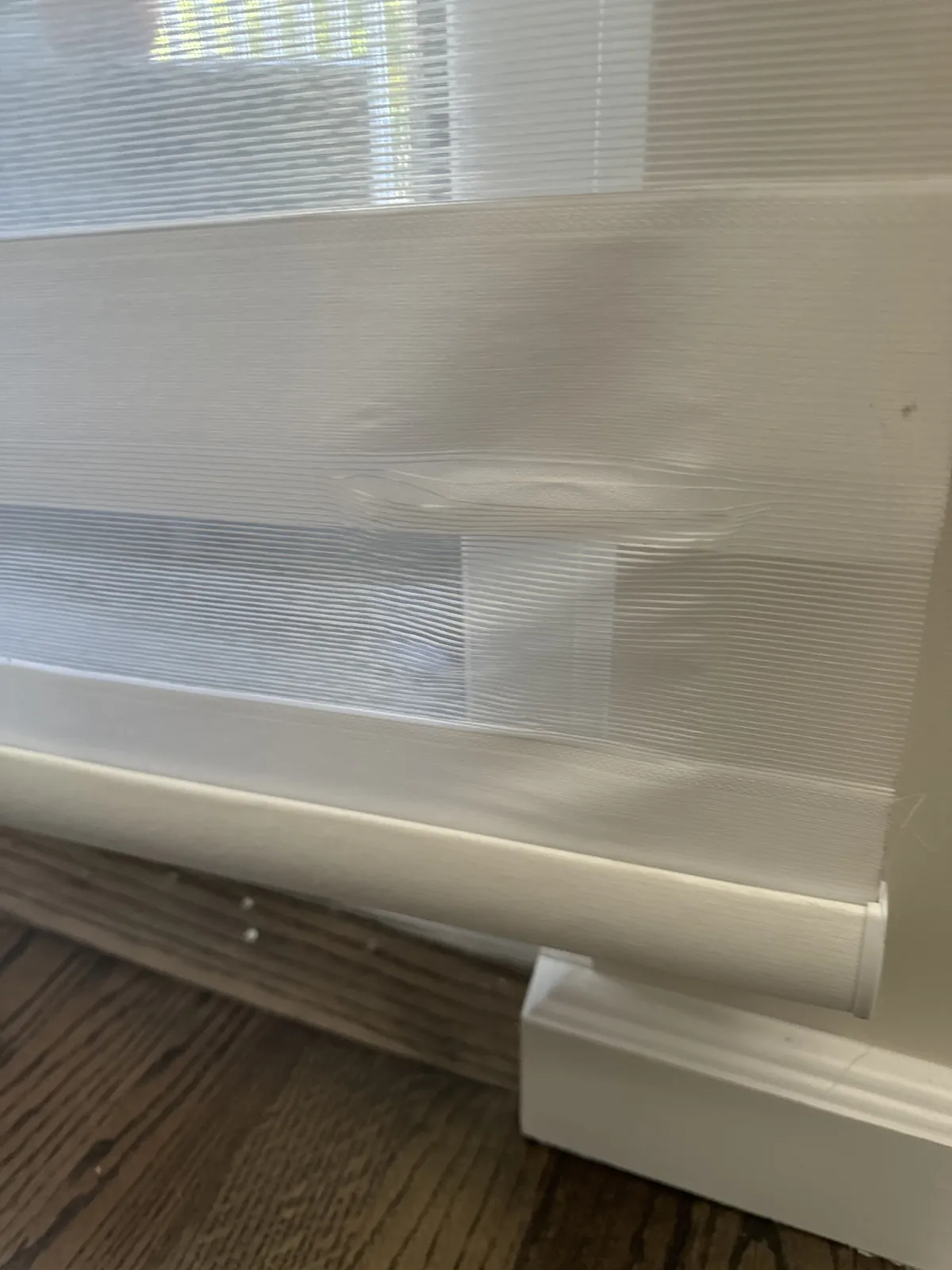
Shades that lose their tension
Roller and cellular shades rely on springs, clutches and internal strings. When one loses tension the shade drifts, sticks, or drops on one side. How it is built decides what can be done.
Keeping a made-to-measure blind in service
A blind that was sized for a tall Victorian sash, or cut to fit one face of a bay, is not something you replace off a shelf. That is the main reason repair makes sense on so many Newton windows. If the slats are straight, the fabric has kept its colour and the headrail is sound, the blind still has most of its life ahead of it once the worn part is dealt with.
There are honest exceptions, and we will point them out:
- When the material has gone. Fabric that has turned brittle in the sun, or wood slats that have warped, will not look right again whatever is done to the mechanism.
- When parts are no longer made. An older mechanism may have no replacement available. We check before recommending anything.
- When the blind no longer suits the room. If you have been meaning to change the room for a while, a failed blind can be the natural moment, and spending on a repair first may not be the best use of the money.
- When safety is a concern. Long looped cords on an older blind in a room where young children play are worth rethinking even if the blind still works. Tell us which room it is in.
Outside those cases, keeping a good custom blind working is usually the sensible choice, and we will say so.
A bay with one broken blind: fix it, or redo the set
Houses with bays raise this question all the time, and there is no single right answer. It depends on the state of the blinds that are still working.
If the others are in good order, fixing the broken one keeps the bay matched and costs less than replacing anything. The repaired blind should go back at the same height and tilt as its neighbours, and we check that it does.
If the others are close to the same failure, it can be better to deal with the whole bay at once than to come back for each blind in turn. They were hung together and they have worked together, so they often wear together.
If one blind has faded differently, perhaps because it faces more sun than the others, a repair may restore how it works without restoring how it looks. In that case we talk about whether you can live with the difference or whether the bay would look better redone.
Whatever you decide, you will know what you are choosing between before anything is ordered.
Measuring Victorian and colonial openings for something new
When a repair is not the right answer, the replacement has to fit the window that is actually there. In older Newton houses that takes care. Frames that have been painted many times are not always square. Sashes in the same room can differ slightly where some have been replaced. A bay’s angled faces each need their own measurement, and the blinds have to clear each other where the faces meet.
That is why Debsan measures and installs its own work. We take the measurements ourselves and fit what we sell, and the person measuring is looking at the frame, the trim and how the window opens, not only the width and height. Our measuring and installation page explains how that works in more detail.
For tall sashes, the length and weight of the finished blind matter as much as its size. A very long blind can be heavy to raise, and that weight is what wore out the old one. It is worth talking through the options for a long window before choosing, and the showroom is the place to see and handle them.
What Debsan carries for the window
Debsan’s window treatment line is Hunter Douglas, shown in the Natick showroom with the fabrics, wallcoverings and paint colours that go with it. If you are replacing blinds across a bay or a whole floor, see our custom blinds in Newton and our wider range of Newton window treatments.
Brackets, casings and old plaster
In a lot of Victorian and older colonial houses, the trouble is not in the blind at all. It is in what the blind hangs from.
Victorian casings are often deep and wide, with layers of paint built up over the years. Brackets screwed into that woodwork hold well when the wood is sound, but where it has dried out or been filled and repainted, a screw can slowly work loose under the pull of a heavy blind. On some walls the bracket goes into plaster rather than wood, and old plaster does not take kindly to being asked to carry weight.
The signs are easy to spot once you look for them: a headrail that sits slightly lower at one end, a small gap opening between a bracket and the trim, fine cracks in the paint around a screw, or a blind that rocks when you raise it. Any of those can make a perfectly good blind behave as if it were broken. Cords rub where they should not, the lock grips at an angle, and the mechanism wears unevenly.
So when we look at a blind that keeps failing, we look at the mounting as well. Sometimes the right repair is to reset the bracket in firm wood, move it a little, or choose a different way of mounting altogether. Fixing the mechanism without fixing the mount just means seeing the same fault again.
If you are deciding between an inside mount, where the blind sits within the frame, and an outside mount on the casing or wall above, a deep Victorian frame gives you real choices. Each changes how the window looks and how much light gets past the edges, and it is worth talking through before anything new is ordered.
Stair landings, high windows and the ones you cannot reach
Larger older houses tend to have windows that are awkward to get at: a tall window on a stair landing, a small one high in a gable, a bay where the furniture sits in front of the glass. These are often the blinds that get left broken the longest, simply because nobody wants to climb up to them.
They are worth mentioning when you get in touch, even if they are not the reason you called. When we are already looking at one window, it is sensible to look at the hard ones at the same time rather than leave them for another day. Tell us roughly where they are and how they are reached, and a photo from the floor is fine.
For a window you can never comfortably reach, it may also be worth asking whether the blind there is the right kind for the spot. That is a question for the showroom or the consultation rather than a repair, but it is one we are glad to talk through.
Bringing it to Natick, or having us look at it in Newton
There is more than one way to start, and the best depends on the blind.
A blind that comes down easily. If the blind is small enough to take down and you are comfortable doing it, ask us whether to bring it to the showroom in downtown Natick. Seeing the mechanism on a bench is often the quickest way to know what has failed. Please ask before you make the trip, so we can tell you whether it is worth it for that particular fault.
A blind that is better left up. Long blinds on tall sashes and the blinds in a bay are often best seen where they hang. A fault that only shows at one height, a bracket set in old trim, or a bay where the blinds need to line up are all easier to judge in place. Send us a note and we can arrange to see them in Newton.
A room that needs more than a repair. If the failed blind is part of a bigger change, our free in-home consultation brings samples to your house so you can choose treatments, fabric and colour in the light of the room itself.
What to send so we can help quickly
A short message with photos tells us a lot. Take one picture of the whole window, so we can see its size and shape, and a second, closer shot of the fault itself. If the blind has a label on the underside of the headrail, a photo of that helps too.
Then a few plain sentences:
- which room it is in, and whether it is in a bay
- what it does wrong: drops, will not stay up, hangs crooked, will not tilt, sticks part way
- whether it is a wood or faux wood blind, a fabric shade, a roller, or a pleated or cellular shade
- whether it sits inside the frame or on the wall above it
- if you know, where and roughly when it was bought
Leave out anything you are unsure about. A rough description and a photo are plenty to start with.
Beyond the blind: the rest of the room
Debsan is a multi-line design center, in business since 1947, and repair is only one part of what we do. If you are standing in a room with a broken blind and thinking it is time for more than a fix, the same showroom can help with the fabric, the walls and the floor.
A tall Victorian window often looks best with a shade for light and privacy and custom drapery in Newton layered over it. A front room with new treatments may be ready for wallpaper or a fresh coat of Benjamin Moore paint, chosen alongside the fabric so they are seen together. You can find every line Debsan runs for Newton on our Newton page, and the full repair line on the blind and shade repair page.
You are under no obligation to look at any of it. A working blind is a fine place to stop. If you do want to go further, it helps to start with the window, because the fabric and colour of the treatment often set the direction for everything else in the room. A strong pattern at the window points one way for the walls; a plain shade under patterned drapery points another. Getting the window settled first makes the later choices easier, and you can take them one room at a time.
Your next step
To get a blind or shade looked at, go to the contact page and send us your photos and a short note, or use the call button to talk it through. We will tell you what we think has failed, whether it looks worth repairing, and the simplest way for us to see it.
Questions from Newton
Our bay has several blinds and only one is broken. Can you fix just that one?
Usually, as long as the part can be had and the blind is otherwise sound. We also make sure the repaired blind lines up with the others in the bay afterwards, so it looks like part of the set again.
The blinds on our tall sash windows keep slipping down. Is that a repair?
Often it is. On long, heavy blinds a worn cord lock or thinning lift cords are the usual cause, and both are the kind of fault worth looking at before giving up on a good blind. A photo of the headrail end helps us tell which.
Can you match a new blind to the old ones if a repair is not possible?
We will try, and we will tell you honestly how close the match will be before you order. If a close match is not possible, you can decide between replacing the one blind, the whole bay or the room.
Do you also look at drapery and paint for the room?
Yes. Window treatments sit in the Natick showroom next to fabric for curtains, wallcoverings, paint from Benjamin Moore and flooring samples. If the blinds have you thinking about the whole room, just say so and we can look at it together.
How do I start?
Use the contact page to tell us what has gone wrong, ideally with a photo, or ring us with the call button, and you will hear back with our view and the easiest next step.