
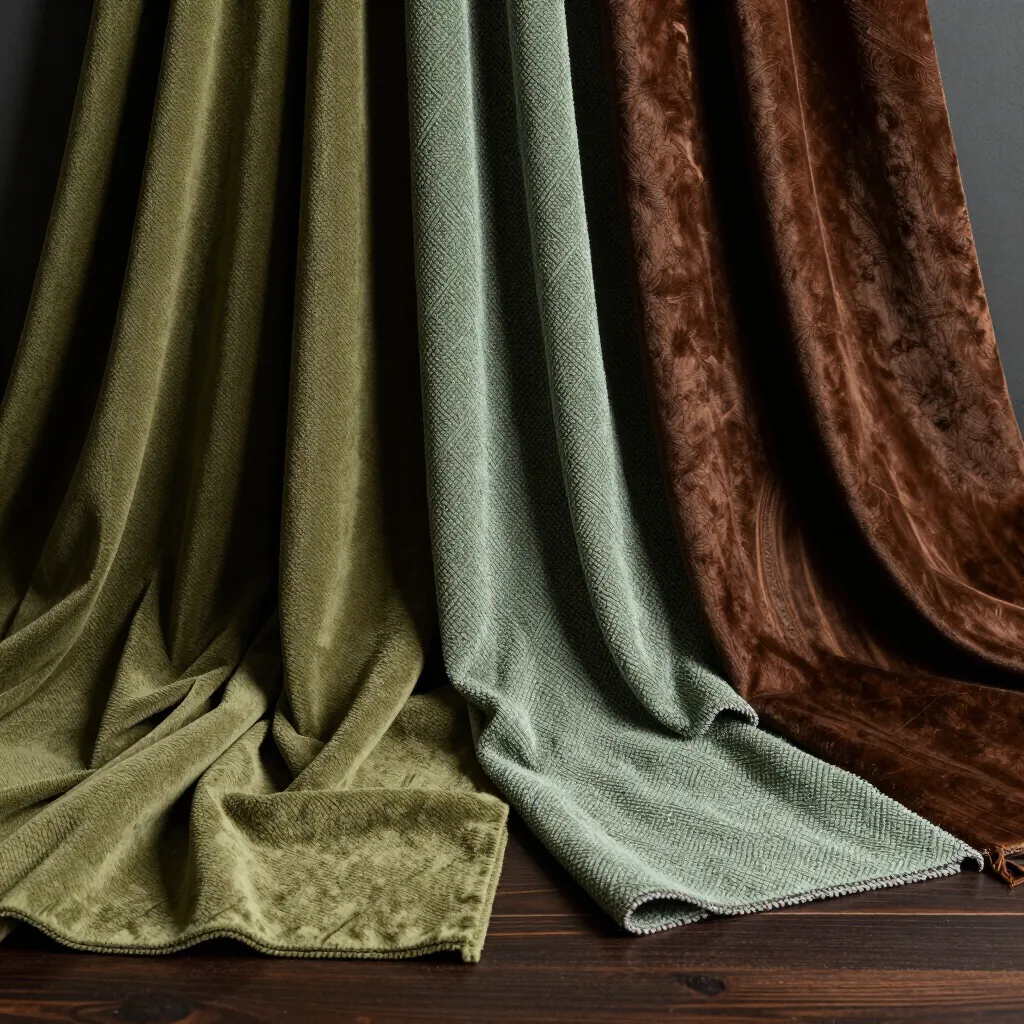
Bay windows, tall sashes and drapery for Newton homes
Custom drapery in Newton, MA has to answer to the windows first. Victorians and big colonials account for a large share of the city’s houses, and they were built with windows that do not come in stock sizes: bays that step out from the front of the house, sashes far taller than anything a ready-made panel is cut for, and pairs that are close to matching without quite being the same. Drapery that fits them has to be measured at the house and made for each opening.
Why bay windows need drapery made for them
A bay is several windows set at angles to each other, and each face is its own size. A straight rod across the front of it leaves the side windows uncovered and cuts the room off from the bay. Drapery made for a bay follows its shape instead, either on hardware that turns the corners or as separate panels for each window, so the bay stays part of the room and the light can still be managed on every side.
Tall sashes and long drops
Many Newton houses have sash windows that run a long way from sill to ceiling, and in the older Victorians they often sit high above the floor too. That means long drapery, and long drapery behaves differently. The fabric has to be heavy enough to hang straight over the full drop without drifting, and the hem has to be set precisely, because on a long panel a small error at the floor is easy to see.
Trim worth keeping in view
Older Newton houses often have generous window casings, and nobody wants to cover good woodwork with a rod bracket in the wrong place. We plan the mounting so the drapery frames the trim rather than hiding it, and so the brackets go into solid wall rather than just the plaster.
Newton windows we make drapery for
Bay windows
Drapery that follows each angle of the bay, or a set of panels with one for each window, so the light can be controlled across the whole bay without losing it to the room.
Tall sash windows
Long panels in a fabric with enough weight to hang straight from the top of the window to the floor, hemmed to the finish you choose along the full width.
Pairs and runs of windows
Matching drapery across windows that are close in size but not identical, with the rod height and stack set so the room looks even.
Doors to a porch or garden
Panels that stack well clear of the door so it still opens fully, often on a longer rod that lets the fabric sit on the wall beside it.
Windows that need drapery and a shade
Drapery for colour and softness with a Hunter Douglas shade behind it for privacy and light, measured together so the two do not get in each other’s way.
The fabrics on our shelves
Our fabric books come from these houses: Kravet, Morris & Co, Stout, Sanderson, Thibaut, Close & Sons, Schumacher, Anna French, Maxwell, Fabricut, Carole, Sancar and Clarke & Clarke. Collections change through the year, so there is usually something new to look at.
For a Victorian room, the English pattern houses are a natural starting point. Morris & Co carries designs that go back to William Morris and the Arts and Crafts movement, and Sanderson and Anna French have deep archives of printed florals. For a large colonial with a simpler, more open feel, a textured plain from Kravet, Fabricut or Stout lets the windows and the architecture do the talking. Thibaut and Schumacher sit between the two, with patterns bold enough for a dining room and quieter designs for a bedroom.
Several of these names, including Thibaut, Schumacher, Sanderson, Morris & Co, Clarke & Clarke and Anna French, also appear on our wallpaper list. If a room is getting both, choosing the paper and the drapery fabric from related collections is one of the easiest ways to make them sit well together.
Measuring a Newton house for drapery
Every window in the project is measured by us, in person, at the house. Older houses settle over the years, so a window that looks square often is not, and the floor beneath it may slope. These are the things we check at each opening.
- The width of the glass, the casing and the clear wall either side, which tells us where the open panels will rest.
- The height from the top of the casing to the ceiling or the cornice, which decides how high the hardware can sit.
- The drop to the floor at several points across the window, because a tall panel shows any slope in the floor.
- On a bay, the width of each face and the angle where the faces meet, so the hardware and the fabric can follow the shape.
- Anything that sits in the way: a radiator under the sill, a window seat built into a bay, a door that swings near the window, or a heating vent in the floor.
French doors and porch doors
Many Newton houses have a pair of glazed doors onto a porch, a deck or the garden, and they need drapery that never gets in the way. The rod runs well past the door frame on each side so the panels can stack fully onto the wall, clear of the swing. We check which way the doors open, whether they fold back against the wall, and whether a handle or a lock sits close to where the fabric will hang. Getting that right at the measure means the doors open every time without catching the drapery.
Fixing into older walls
Plaster on wood lath, common in older Newton houses, needs care. A bracket that only grips the plaster will work loose under the weight of a long, lined panel. We look for solid framing or use fixings meant for the wall we find, and on a heavy drapery that matters as much as the measurements do.
Bays with window seats
A bay with a built-in seat is one of the nicest spots in a Victorian house, and it changes the drapery plan. Full-length panels across the front of a seat make it awkward to use. Often the better answer is drapery on the outer sides of the bay, framing the whole space, with shades on the individual windows above the seat. We will sketch out the options with you on the visit.
For a fuller account of how measuring and fitting work on any window treatment, see our page on measuring and installation.
Fabric, lining and the weight of a long drop
On the tall windows Newton houses are known for, the fabric choice has as much to do with how the drapery will hang as with how it looks. A medium or heavier weave, lined, falls in deep, regular folds and keeps its shape over a long drop. A very light fabric on the same window can look thin and tends to move with every draught. If you love a lighter cloth, an interlining between the face fabric and the lining can give it the body it needs.
The lining also decides how much light reaches the room and what the window looks like from the street. In a front parlour, a softer lining lets daylight through while giving privacy. In a bedroom, a darker lining keeps the morning out. Lining also protects the face fabric from fading in a sunny bay, which matters most in rooms where the drapery stays closed for part of the day.
Heading, fullness and hardware
The heading is the finish along the top edge of each panel. A crisp pleated heading suits the formal rooms of a Victorian; a softer, more relaxed heading can suit a family room or a bedroom. Fullness is how much fabric goes into each panel compared with the width it covers; more fullness gives deeper folds and a richer look on a tall window. The hardware can be part of the design, as a decorative rod with rings, or it can stay out of sight. On a bay, the hardware has to turn the corners neatly, and we plan that as part of the measure.
We talk through all of these with you in the room, with the fabric in your hand, because they are much easier to judge in place than on paper.
From Waban to Chestnut Hill: coming to you
Newton is made up of villages, and the consultation reaches all of them: Waban, Newtonville, Chestnut Hill, West Newton, Auburndale, Newton Centre, Newton Highlands and every other corner of the city. Wherever the house is, the visit is free and we come to it.
On the visit we look at each room with you, in the light you actually get, with your floors and furniture in place. We measure every window that is in the project, check the walls and the trim, and go through fabric, lining, heading and hardware choices together. If you have already chosen fabrics at the showroom, this is when you see them in the room they are meant for. Our in-home design consultation page explains the visit in more detail.
Afterwards we price the drapery on your windows and your choices, so you have a clear figure before anything is ordered. For the factors that push a drapery price up or down, read what goes into custom drapery cost, so nothing in the quote is a mystery.
What you leave the visit with
By the end of the consultation you should know which windows are getting drapery, what kind of heading and lining each room needs, how the hardware will work on any bays, and which fabrics are on the shortlist. If you want time to think, or to see a fabric in another light, that is fine. Nothing is ordered until you have the price and are happy with it.
Or start at the showroom in Natick
Our downtown Natick showroom is where the fabric books live, and you are welcome to come and look. Debsan has been in Natick since 1947, and choosing fabric in person is still the best way to do it: you can test the hand of each sample, see how a print reads at a distance, and take a sample to the window to see it in daylight. A photo of your room, a paint chip or a cushion from the sofa helps a great deal. Our contact page has the details for finding us.
Room by room in an older Newton house
The rooms of a Victorian or a large colonial each ask something different of drapery, and it helps to think about them one at a time before choosing a fabric for the whole house.
Downstairs at the front, the parlour or living room tends to be the dressiest space in the house and the one the street sees. It often has the tallest windows and, in many Victorians, the bay. This is where a fuller drapery with a crisp heading and a good lining earns its place, and where the same lining colour on every street-facing window keeps the front of the house looking orderly from outside.
The dining room is where pattern often works best. It is used mostly in the evening, so the drapery is seen with the lamps on, and a print with some depth of colour can carry the room. If the walls are papered, the drapery can take one colour from the paper in a plain weave and let the pattern stay on the walls.
Bedrooms on the upper floors tend to have shorter windows and lower ceilings than the rooms downstairs, and the main job is darkness and privacy. A darker lining does most of that work, and drapery that returns to the wall at the sides stops light from creeping round the edges.
Rooms under the roof, where a Victorian or a colonial has a finished top floor, may have small windows, dormers or sloping walls. These often suit a shade more than drapery, chosen in a colour that sits with the fabric in the rooms below. We will tell you on the visit where drapery makes sense and where something flatter will look better.
Older windows and a warmer room
Many older Newton houses still have their original sash windows, and they can let in a draught on a cold night. Lined drapery, drawn in the evening, puts a layer of fabric between the room and the glass, and an interlined drapery adds more. It does not replace a well-fitted window, but it makes a room by an old sash feel noticeably more comfortable in winter, and it is one more reason to choose the lining with care.
Drapery as part of a bigger Newton project
In a large older house, drapery often comes up when a room is being redone from top to bottom. That is a good time to choose everything at once. We carry wallpaper and Benjamin Moore paint as well as fabric, so the walls, the trim colour and the drapery can be looked at together, in one place, before anything is ordered. If a dining room is getting a patterned paper, for example, the drapery might pick up one colour from it in a plain weave, or carry a related pattern at a different scale.
If you are working with an interior designer, we are glad to work from their selections and measure and make the drapery to their plan. We will report back on what the measure turns up, for instance limited space above a casing or a radiator that changes the length, so the design and the house agree.
You will find our full drapery and fabric range on the custom drapery and fabrics page, our Newton wallpaper work on the wallpaper in Newton page, and the rest of what we do for the city on our Newton page.
Questions from Newton
Can drapery follow the shape of our bay window?
Yes. We measure each face of the bay and the angles between them, then plan either hardware that turns the corners or separate panels for each window. Which one suits depends on the size of the bay, whether it has a seat, and how you want to use the light.
Our sash windows are very tall. Will long drapery hang properly?
It will, with the right fabric and lining. We help you choose a cloth with enough weight for the drop and set the hem from measurements taken across the whole width, so the panels hang straight and finish evenly at the floor.
There are radiators under most of our windows. What can we do?
Floor-length drapery over a radiator blocks the heat, so we plan around it. Common answers are panels that frame the window to either side without covering the radiator, drapery that stops at the sill, or a shade on the glass with drapery used only as side panels.
Is the consultation available in our part of Newton?
Yes. The free in-home consultation is available across the city, from Auburndale and West Newton to Newton Highlands, Waban and Chestnut Hill. Tell us where you are when you get in touch and we will arrange the visit.
Arrange your free consultation
To get started on drapery for your Newton home, fill in the short form on our contact page, or use the call button to speak with the store. A brief message on the rooms and the kind of windows you have, bays, tall sashes or both, is all we need to plan the visit.