
Welcome. If a blind in your house has stopped going up, stopped coming down or started hanging at an angle, this is the place to start. We offer blind and shade repair in Natick, MA, out of the showroom in Natick Center, and the people who look at a broken blind or shade are people who fit blinds and shades for a living. Tell us what is wrong, show us a photo or bring it in, and we will tell you plainly whether it is worth repairing.
Most window treatments fail in a small way long before they fail completely. A cord frays, a lock stops holding, a wand spins without tilting anything. Those are often the cheapest moments to deal with a problem, because the rest of the blind is still sound.
Why Natick windows wear out their blinds
Natick’s housing gives window treatments very different jobs from street to street, and that shapes what breaks.
Victorians and two-families near the common
Close to the common in Natick Center, the Victorians and two-families have tall sash windows, deep wooden casings and, quite often, trim that has been painted many times over. Tall windows mean long blinds and heavy loads on the lift cords and the cord lock. Brackets screwed into old, softened trim or plaster can work loose. In a two-family, the same window size often repeats up and down the house, so one failed blind is frequently the first of several that were all fitted at the same time.
Capes and ranches toward Lake Cochituate
Further out, toward Lake Cochituate, the post-war capes and ranches bring other problems. Cape dormers put small windows into tight, angled spaces where a blind gets knocked as it is raised. Ranches tend to have wide picture windows and sliding doors, and wide treatments put their strain on the middle of the headrail and on the tilt gear. Strong, steady sun on those big panes fades fabric and dries out cords sooner than on a shaded window.
Walk-in is easy here
Because the showroom is in Natick, you can simply come in. Bring a photo of the problem and of the headrail, or the blind itself if it comes down easily, and we can look at it with you on the counter.
What we look at, and what tends to fail
We look at blinds and shades as the people who measure and install them. That matters, because a repair is mostly about understanding how a particular blind was built and where it carries its weight.
Lift cords and cord locks
A frayed or snapped lift cord is the most common failure on a corded blind. The cord lock in the headrail can also wear, so the blind drops when you let go. We check both, because replacing a cord without a lock that holds only moves the problem.
Tilt mechanisms and wands
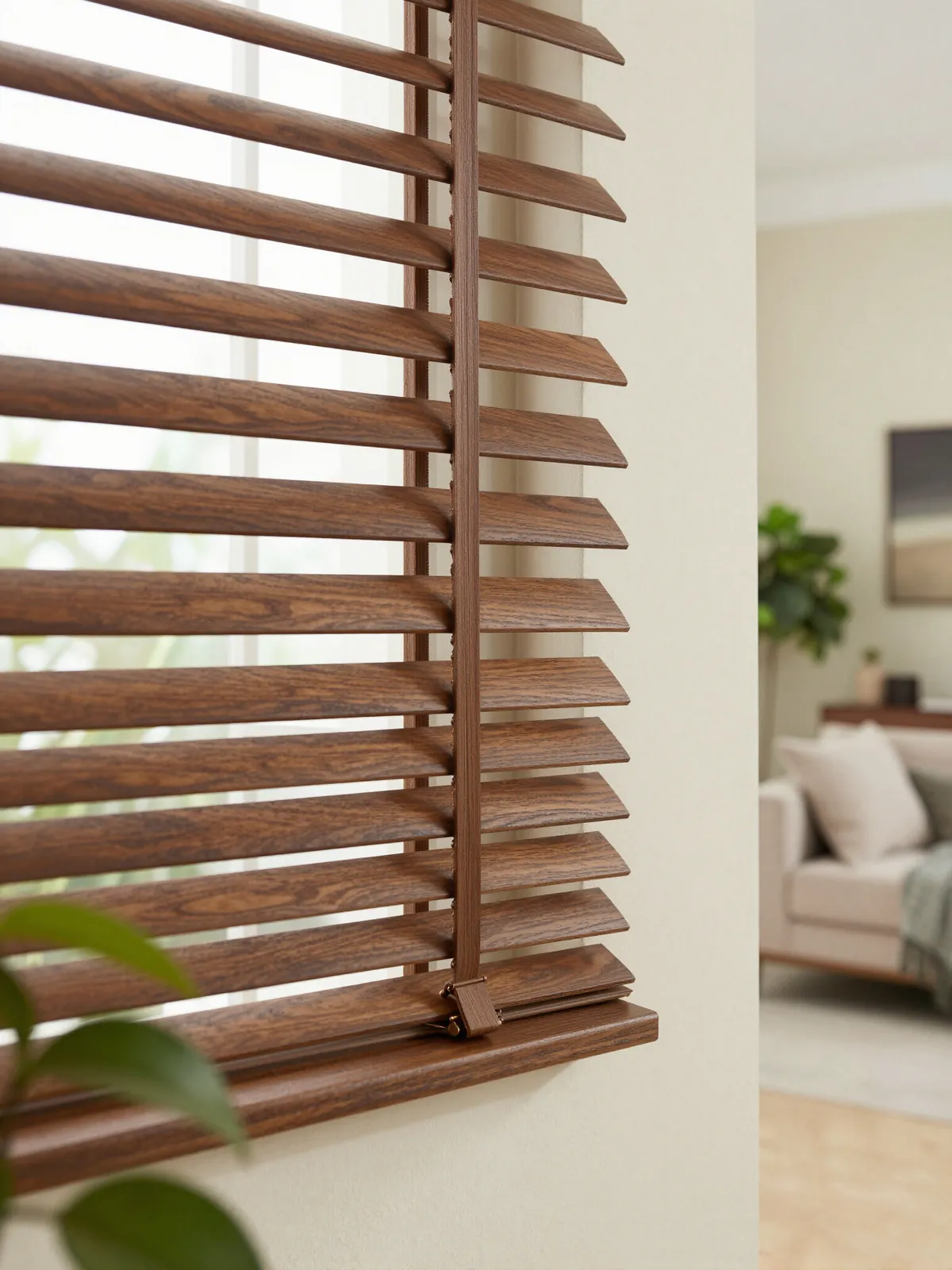
When the wand spins and the slats do not move, the tilt gear in the headrail has usually stripped or slipped. On wood blinds, the ladder strings that hold each slat can wear or break as well, leaving slats hanging out of line.
Roller shade clutches and springs
A roller shade that will not stay where you leave it, or creeps back up, usually has a worn clutch or a spring that has lost its tension. A broken bead chain is a simpler fix than it looks.
Cellular and fabric shades
Cellular shades run on fine internal cords, and fabric shades can come away from the rail or sag at one side. We look at the cords, the rail and the fabric together, because a faded or brittle fabric changes the answer.
Brackets, valances and hardware
Sometimes the blind is fine and the mounting has failed: a bracket pulled out of old trim, a valance clip lost, a hold-down bracket on a door that has broken. These are often the quickest repairs of all.
Motorized shades
A motorized shade that stops responding is not always a broken motor. Batteries, a lost pairing with the remote or a setting that has slipped are all worth checking first, and we will tell you what we find.
Early signs worth acting on
A blind rarely breaks without warning. If you notice any of these, it is worth getting in touch before the cord snaps or the blind comes down at an awkward moment:
- One side sits lower than the other when the blind is raised. The lift cords have stretched unevenly, or one has started to fray inside the headrail.
- The blind drifts down on its own after you lock it. The cord lock is wearing, and it tends to get worse quickly.
- A grinding or clicking sound when you turn the wand. The tilt gear is slipping, and forcing it will finish it off.
- Slats that will not lie flat or hang out of line. A ladder string has worn or slipped on a wood blind.
- A roller shade that sticks halfway or will not stay put. The clutch or the spring needs attention.
- Fabric pulling away from the rail on a cellular or fabric shade. Glue lines and stitching give way slowly, then all at once.
- A headrail that moves when you pull the cord. The brackets are working loose from the trim or the wall.
Catching a problem at this stage often means a smaller repair, and it avoids the damage a falling blind can do to the trim, the sill or whatever sits below the window.
Quick checks before you get in touch
Some problems that look like a broken blind are not. These checks take a minute and can save you a trip:
- A corded blind that will not come down. Pull the cords gently toward the middle of the blind to release the cord lock, then let them slide up through your hand. Pulling straight down keeps the lock engaged.
- A roller shade that will not move. Look at each end of the roller. If one end has slipped out of its bracket, the shade will jam. Seating it back properly often clears it.
- A motorized shade that does nothing. Try the batteries or the power first, then the remote’s own batteries. Make a note of what the shade does, if anything, when you press the button.
- A blind that tilts but looks uneven. Check whether a slat has simply slipped out of its ladder at one end. It can often be eased back.
If none of that helps, stop there. Forcing a stuck mechanism is the quickest way to turn a simple repair into a replacement.
Shutters, and when the fix is an adjustment
Shutters are built to last, but they do need adjusting now and then. Louvers that flop open or closed on their own usually need their tension set again, not new parts. A panel that drags on the frame or will not latch has often dropped slightly on its hinges as the house has moved through the seasons. Older houses with settling frames, like many of the Victorians close to Natick Center, are more prone to this than newer ones.
Other treatments have their own adjustments too. A blind that sits crooked may simply need its headrail levelled, and a shade that does not close fully to the sill may need its limit set. These are small jobs, and it is worth asking about them before assuming anything is broken.
Weighing a repair against something new
We will give you a straight answer about whether a repair makes sense. Repair is the right call when the blind or shade is in good shape apart from one failed part, the fabric or slats still look right, and the parts it needs can still be found. Replacement is usually the better choice when several things are failing at once, the fabric has faded or split, or the blind is an older corded design you would rather not have in a room children use.
A few things we weigh with you:
- The condition of everything else. A new cord on a blind with cracked slats or sun-rotted fabric buys very little time.
- Whether the parts exist. Some older blinds and some makers’ designs are simply no longer supported.
- How many windows are involved. If one blind in a matching row fails, it may make sense to repair it and keep the row, or to plan for the whole row together.
- Safety. Older corded blinds with loops or long hanging cords are a real hazard for small children and pets. If a repair would keep a looped cord in place, we will say so and talk you through cordless and motorized options.
- How the room is used. A blind that is raised and lowered every day needs to be dependable. One that stays half-down all year asks much less of its mechanism.
If replacement is the better answer, we can show you new custom blinds and shades in the showroom or at your home, and measure for them. If repair is the better answer, we will tell you that too, even when it means selling you less.
The brand we carry, and blinds from elsewhere
Hunter Douglas is the window treatment brand we carry. It is the line we know from the inside: how its blinds, shades and shutters are built, how they mount, and how they are adjusted after installation. If you are reading about Hunter Douglas before deciding on anything new, our Hunter Douglas guide goes through the product types.
Plenty of homes have blinds and shades from other makers, or from a previous owner, with no label at all. Tell us what you have. A photo of the whole window, one of the headrail with its end cap or label, and one of the part that has failed is usually enough for us to say whether we can help and what the likely options are.
How a repair runs with us
- Get in touch or come in. Write to us through the contact page, ring us from the call button, or walk into the showroom in downtown Natick. Tell us what the blind is doing, or not doing, and roughly how old it is if you know.
- Show us the problem. Photos are often enough to start. If the blind comes down easily, you can bring it with you. For a large or awkward treatment, we can talk about looking at it in place.
- Hear what we found. We tell you what has failed, whether a repair is sensible, and what replacement would involve, so you can choose with both in front of you.
- Repair, or measure for new. If you go ahead with a repair, we arrange it. If you choose a replacement, we measure the window ourselves, so the new treatment fits the window you have.
- Back on the window. A repaired or new treatment goes back up properly mounted and adjusted, with the brackets set into sound material.
Looking after blinds so they last
A lot of repairs start with small habits. None of this is complicated, and it costs nothing:
- Raise and lower evenly. On a corded blind, pull the cords together and straight down rather than off to one side. Pulling at an angle wears the cord against the headrail.
- Tilt gently. Stop turning the wand when the slats are closed. Forcing past that point is how tilt gears strip.
- Lift before you tilt open, not the other way round. Raising a blind with the slats closed puts extra strain on the ladder strings.
- Mind the heat and the damp. Wood blinds do not like a radiator directly below them or a steamy bathroom. A different material in those spots saves repairs later.
- Dust lightly and often. A soft duster or a vacuum brush keeps grit out of the mechanism and off the fabric.
- Keep doors and slats apart. A blind on a door needs its hold-down brackets in place, or it swings and catches every time the door moves.
Where repair fits with the rest of what we do
Repair is one part of a store that also sells and installs new window treatments, so you never have to start again with someone new if a repair turns into a replacement. If you are replacing, our window treatments page sets out the whole range, and our measuring and installation page explains how a new treatment is measured and fitted.
Taking blinds down is also a natural moment to look at the rest of the window wall. Bare trim is far easier to repaint, and our Benjamin Moore paint range is here to choose from. If the room needs softening, custom drapery can hang over a repaired blind, and wallpaper and flooring are under the same roof. You can see them together in the showroom, in the same light, with the same people.
Natick first, and a few nearby towns
Blind and shade repair is a tight-radius service for us. It is built around the Natick showroom, because it works best when you can come in, show us the problem, and get the treatment back on your window without a long wait for anyone to travel.
Beyond Natick, we also offer blind repair in Wellesley and blind repair in Newton, along with Framingham. If you are further away, get in touch anyway and tell us where you are. For new window treatments, our service areas page lists every town we work in.
Questions about blind and shade repair
Can a broken blind really be repaired, or does it always need replacing?
Many can be repaired. A snapped lift cord, a worn cord lock, a broken bead chain or a loose bracket are all repairable when the rest of the blind is sound. When several parts are failing or the fabric has faded and split, replacement usually makes more sense, and we will tell you which side of that line yours is on.
Do you only repair Hunter Douglas blinds and shades?
Hunter Douglas is the brand we carry and know best. For other makers, send us photos of the window, the headrail and the failed part, or bring the blind in, and we will tell you whether we can help.
What should I bring or send?
A photo of the whole window, a photo of the headrail with its end cap or any label, and a close photo of what has broken. If the blind comes down easily, bring it with you to the showroom.
My motorized shade has stopped working. Is the motor gone?
Not necessarily. Flat batteries, a lost pairing with the remote or a slipped setting are common causes and are worth checking first. Get in touch and describe what the shade does when you press the button.
Is it better to repair an old corded blind or replace it?
If the blind has looped or long hanging cords in a room used by small children, replacing it with a cordless or motorized design is usually the safer choice. If the cords are already safe and only one part has failed, a repair can be the sensible answer.
Come in, or get in touch
The quickest way to start is to come into the showroom in downtown Natick with a photo of the problem, or the blind itself. If getting here is awkward, describe the fault in a short message on our contact page or reach us with the call button. Either way, you will hear our view on the repair and the next step.