
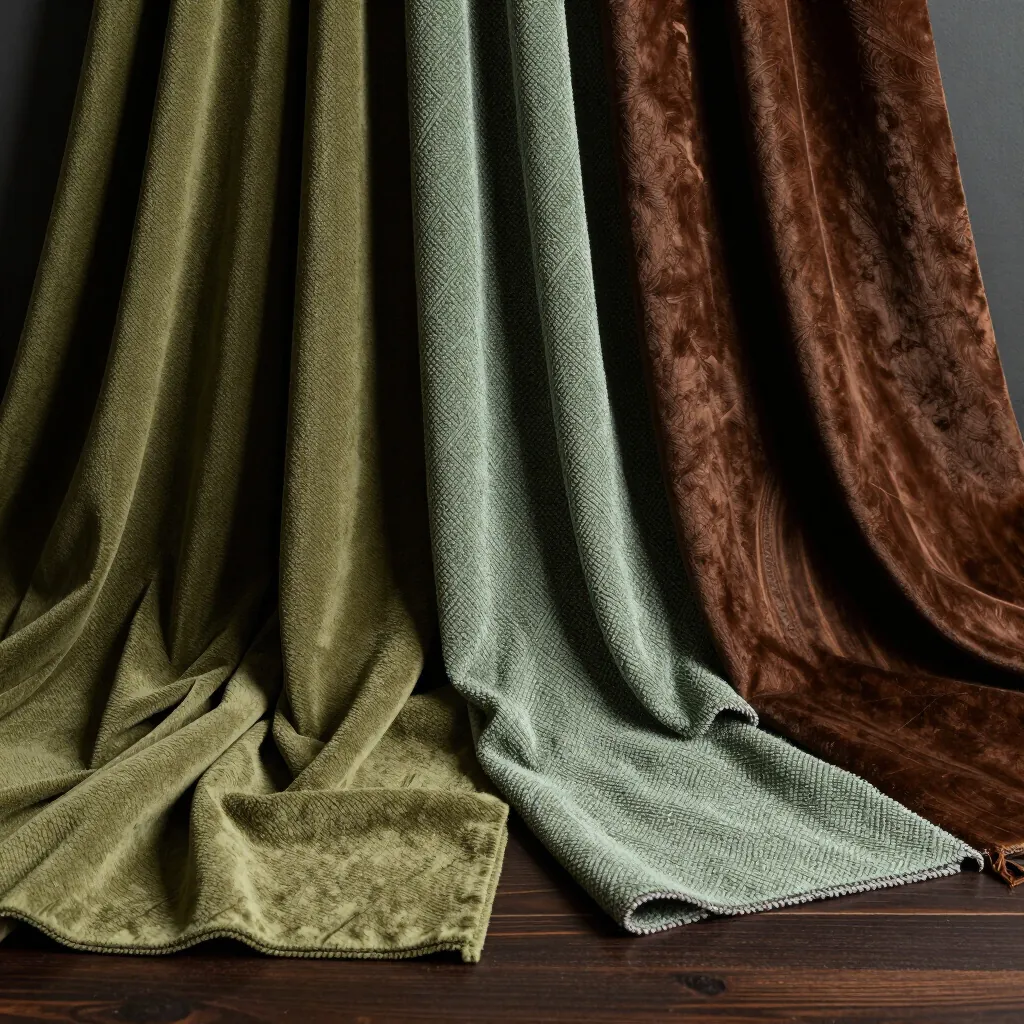
Why Wellesley houses suit made-to-measure drapery
If you are planning custom drapery in Wellesley, MA, the house usually writes most of the brief before anyone opens a fabric book. A great many of the town’s older colonials and shingle-style homes carry a lot of windows: a pair either side of the fireplace, a run of glass across a sunroom, tall openings on a stair landing, smaller ones set under the slope of a roof. Ready-made panels come in a short list of stock lengths and widths, and a house like that rarely lines up with any of them.
Drapery made to measure starts from each opening as it really is. We set the width so the fabric stacks back clear of the glass when it is open, or just onto the trim if you would rather keep more of the window covered. We set the length to the finish you choose: grazing the floor, breaking softly onto it, or stopping neatly at the sill. When a room has several windows of slightly different sizes, those decisions are made once and carried across all of them, so the room reads as one piece rather than a set of near misses.
A house with many windows is a whole-room project
With this many openings, drapery in a Wellesley house is rarely a single-window job. More often it is the living room and the dining room together, or a whole floor being done at once. That is where a design center with several lines under one roof earns its keep. The drapery fabric, the wallpaper in the next room and the Benjamin Moore colour on the trim can all be chosen side by side, in the same place, instead of being matched up later from memory and a phone photo.
Working alongside your designer
If an interior designer is already guiding your project, we are glad to work from their plan. Bring their fabric selections, their drawings or simply their notes, and we will measure, price and make up the drapery to suit. We will also pass on anything the windows reveal, like a radiator that changes the length or trim that limits where a rod can go, so nothing comes as a surprise later.
Drapery fabrics we carry for Wellesley homes
Kravet and Fabricut
Two broad fabric houses with plains, textures, sheers and patterns. When a project covers many windows across several rooms, a wide range like this makes it easier to find related fabrics that sit well together.
Thibaut and Schumacher
Pattern-led collections with plenty of colour. Both names are on our wallpaper list too, which helps when you want the walls and the windows of a room chosen together.
Morris & Co, Sanderson and Anna French
English houses known for printed florals, botanicals and classic patterns, and all three also make wallpaper we carry. They suit the traditional rooms of an older colonial well.
Clarke & Clarke, Carole, Close & Sons, Maxwell, Sancar and Stout
The rest of our fabric shelves, covering everything from quiet textured plains to bolder prints. Ask us what is new when you visit, because collections change through the year.
Hunter Douglas behind the drapery
Many rooms work best with drapery for softness and colour and a Hunter Douglas shade behind it for light and privacy.
How we measure a Wellesley house for drapery
Good drapery depends on good numbers, and we take them ourselves. At the consultation we put a tape on each window in the project, not just one per room, because in older houses no two openings are quite the same even when they look it.
For each window we note the width of the glass and of the trim around it, and how far the wall runs on each side before it meets a corner, a door or a bookcase. That space sets how much room the open panels have to gather on the wall. Where there is room, letting the fabric stack onto the wall instead of the glass lets in more daylight and makes the window look wider than it is.
We also look up. Mounting the rod or track higher than the top of the trim makes a window read taller, and it is one of the simplest ways to give a room more height. In many older colonials, though, crown moulding or a low ceiling over a window limits how high you can go, so we measure the space between the trim and the ceiling and talk through what will look right.
Floors, radiators and other things a tape measure finds
Older floors are rarely level from one side of a room to the other. We take the length at several points across each window, not just in the middle, so that drapery set to graze the floor does just that along its whole width. If the floor dips, we tell you, and we set the finished length to suit.
Radiators under windows are common in older Wellesley houses, and they change the plan. Drapery that runs to the floor over a radiator blocks the heat and spends winter sitting against a hot surface. In those rooms we might suggest drapery that stops at the sill, side panels that frame the window without covering the radiator, or a shade behind for the glass itself. Window seats, built-in shelving and doors that swing close to a window get the same attention.
Dormers, landings and the windows that do not fit the pattern
Shingle-style houses in particular tend to have a few openings that break the rhythm of the rest: a window tucked into a dormer, a small square one high on a stair wall, a wide one under a sloping ceiling on the top floor. These are often the windows people leave bare because nothing off the shelf fits. They are also the ones that show most from the street.
Some of them suit drapery well. A landing window with wall space either side can take a pair of panels on a short rod, which softens a hard corner of the house. Others are better served by something flatter. A dormer window with almost no wall beside it has nowhere for drapery to stack, so a shade fitted inside the frame, in a colour that sits with the drapery in the rooms below, is usually the better answer. We look at each of these on the visit and tell you honestly which approach suits it, so the awkward windows end up looking as considered as the main rooms.
Choices you make with us at the consultation
- The fabric, from the books at the showroom or from the selections your designer has made.
- The heading, meaning the pleats or gathers along the top edge, which changes how formal or relaxed the finished drapery looks.
- The lining, which decides how much light comes through, how the fabric hangs, and how the windows look from the street.
- The hardware: a decorative rod and rings that are part of the look, or a track that stays out of sight.
- How the drapery opens and closes, and whether it is drawn every day or stays mostly in place as a frame for the window.
For a closer look at how measuring works on any window treatment, our page on measuring and installation goes through it step by step.
Installation
We install what we measure. On the day, the brackets go in at the heights agreed at the consultation, the hardware goes up, and the drapery is hung, dressed and checked at every window, so the folds fall evenly and the hems sit where they should.
Light, privacy and fabric in a house with this many windows
When a house has glass on every side, the light changes a great deal from room to room and through the day. A room facing south or west can take strong afternoon sun, which is pleasant in winter and hard on rugs, upholstery and the drapery fabric itself over time. A good lining protects the face fabric and the room behind it. In a sunny room we will often suggest a lining that softens the light, or a lined drapery paired with a shade behind it for the brightest hours.
Bedrooms usually call for something else. If you want the room dark in the early morning, the lining does most of that work, and the way the drapery returns to the wall at each side matters too, because light leaks round the edges of a panel that stops short. We plan for that when we measure.
Front rooms that face the street often need privacy in the evening and daylight during the day. Sheers on their own, or sheers layered with lined drapery, give you both: the sheer stays closed to soften the view in, and the drapery comes across when the lamps go on.
Sunrooms and enclosed porches
Many older Wellesley houses have a sunroom or an enclosed porch with glass on several sides. These rooms get the most light in the house and the hardest wear on fabric. Drapery here is usually about softening the room and framing the views rather than closing it off, so side panels in a sturdy, lined fabric often work better than full drapery that is drawn every day. Where the sun is strong, a Hunter Douglas shade on the glass does the daily work of controlling glare and heat, and the drapery stays put as a frame.
Choosing fabric for the way a room is used
A formal living room that sees light use can carry a delicate silk look or a fine print. A family room with a dog, children and an open window in summer is better served by a sturdier weave that will not show every mark. Fabric weight matters on tall windows too: a heavier cloth hangs in deeper, steadier folds over a long drop, while a lighter one gives a softer, more casual line. We will show you how each fabric you like actually hangs, not just how it looks flat in a book.
Looking after drapery once it is up
Lined drapery is easy to live with. A light vacuum with a soft brush attachment every so often keeps dust out of the folds, and drawing the panels open and closed now and then stops the pleats from setting in one position. For cleaning, we will tell you what suits the fabric and lining you chose, because a cotton print and a silk-look weave need different care.
Planning drapery across several Wellesley rooms
When drapery is going into a run of connected rooms, a little planning keeps the house feeling calm. A few habits help:
- Keep the heading style and the finished length consistent in rooms you can see from one another, such as a living room and dining room either side of a hall.
- Let the fabric change from room to room where the rooms are separate, so each one has its own character.
- Use the same lining colour on every window that faces the street. From the outside, a house where every window shows the same ivory or white lining looks orderly, whatever fabric is on the inside.
- Order the fabric for the whole project together where you can, so it comes from a single run and the colour matches from room to room.
If wallpaper or paint is changing in the same rooms, this is the moment to choose them together. There is more on planning walls, trim and windows as one scheme in our guide to pairing paint, paper and window treatments, and our wallpaper page for Wellesley covers the walls.
Coming to the showroom, or having us come to you
You can begin in either place. Many projects begin at the showroom and finish at the house.
Visiting us in Natick
Our showroom is in downtown Natick, where Debsan has been helping people choose fabric and wallpaper since 1947. The fabric books are there to handle, so you can judge how heavy a fabric is, hold a print up to the window and see the colour in daylight. Bring what you can from the room: a photo, a paint chip, a pillow or a cushion cover, a swatch of the rug. It all helps narrow the choice quickly. The contact page has everything you need to find us.
Measuring and choosing at your Wellesley house
We also come to you, and the consultation is free. We see the rooms as they are, with your furniture, your floors and the light you actually get. We measure every window properly, look at the trim, the radiators and the ceiling heights, and talk through the fabric, heading, lining and hardware with you standing in the room it is all for. If you have narrowed things down at the showroom, the consultation is the time to see those fabrics against your own walls. You can read more about what happens on the visit on our in-home design consultation page.
After the visit, we price the job on your actual windows and the choices you have made, so you know where you stand before anything is ordered.
What decides the cost of custom drapery
Every drapery job is priced on its own, because the things that drive the cost are different in every house. The main ones are the fabric you choose, how much of it each window needs, the lining, the heading style, the hardware, and the number of windows in the project. A tall window with a full, generously pleated drapery uses a good deal more fabric than a short one with a simple panel. Our page on what custom drapery costs explains each of these in more detail, without guesswork, so you can plan with a clear picture.
We are happy to price more than one option. If a room is coming in higher than you want, we can show you where a change to the fabric, the fullness or the lining makes the most difference, and where it is worth keeping what you chose.
The custom drapery and fabrics page shows the whole fabric side of the store, and our Wellesley town page gathers every line we offer there.
Questions from Wellesley
Can you make drapery for rooms my designer has already planned?
Yes. We work from your designer’s selections and notes, measure the windows ourselves, and make up the drapery to their plan. We will also flag anything at the windows that affects the design, such as limited space above the trim or a radiator under the sill.
Our windows are all slightly different sizes. Will the drapery look uneven?
No. We measure each window on its own and then set the rod height, stack and finished length so the drapery lines up across the room. The goal is that the room looks consistent even though the openings behind the fabric are not.
Can new drapery go over the blinds or shades we already have?
Usually, yes. We check the depth of the window and the trim to make sure the drapery hardware clears what is already there. If an existing shade is worn out, we can also look at a Hunter Douglas replacement at the same visit.
Do we need to come to Natick before the consultation?
No. You can start with the free in-home consultation and see fabrics there, or visit the showroom first if you want to browse. Many projects use both: a look at the books in Natick, then a visit to the house to measure and decide.
Book a free in-home consultation
When the Wellesley rooms are ready for drapery, drop us a line from our contact page, or let the call button put you straight through to the store. Mention the rooms you are thinking about and a rough sense of how many windows they hold, and we will book a visit to measure. The consultation costs nothing.