
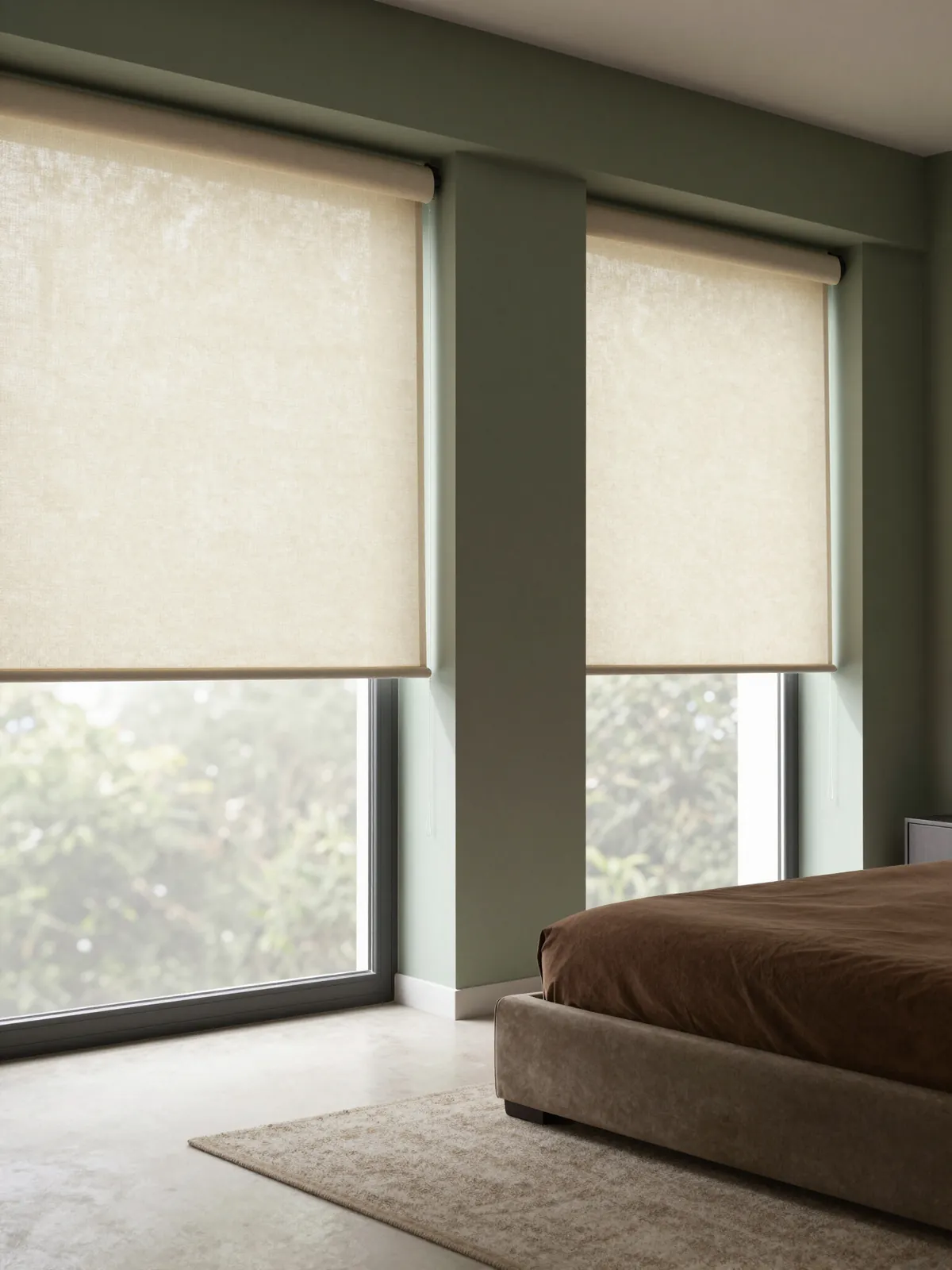
Where stock blinds stop fitting Newton windows
Custom blinds in Newton, MA earn their keep at two kinds of window above all: the bay and the tall sash. Victorians and large colonials make up much of the housing across Newton’s villages, and both styles lean on those two features. A store-bought blind comes in set widths and set drops. The windows in these houses were built by hand to the proportions of each room, and they seldom land on a set size.
What goes wrong with a near fit
A blind that is close but not right shows it every day. Too wide, and it rubs the frame as it goes up and down, wearing the paint and the blind. Too narrow, and daylight leaks down both edges. Too short on a tall sash, and a band of bare glass shows below the bottom rail. Too long, and the extra blind piles on the sill. On a single window you might live with it. In a bay where several blinds sit side by side, or a parlor with a row of tall sashes, the differences add up and the room looks unfinished.
Bays built at their own angles
Newton’s bays come in several forms: angled bays with a wide center window and narrower sides, curved bays made of slim sections, and box bays that step out square from the wall. Each section is its own small window. The blinds have to be sized so they clear one another at the corners when raised, meet closely when lowered, and line up across the top so the bay reads as one piece. That only works if every section is measured and made on its own.
Sashes drawn for high ceilings
Rooms with high ceilings were given windows to match. A tall double-hung sash in a Victorian parlor or a big colonial’s front room can run a long way from sill to head. A blind for that window has to be made to its full height, and it has to be something you can lift easily every day. Those two needs together are what push these windows toward custom work.
Blinds and shades we size for Newton houses

Blinds for each bay section
Every section of a bay is fitted with its own blind or shade, cut to that section’s width and drop. Lowered, they meet cleanly at the corners. Raised, they line up across the top of the bay.
Wood blinds
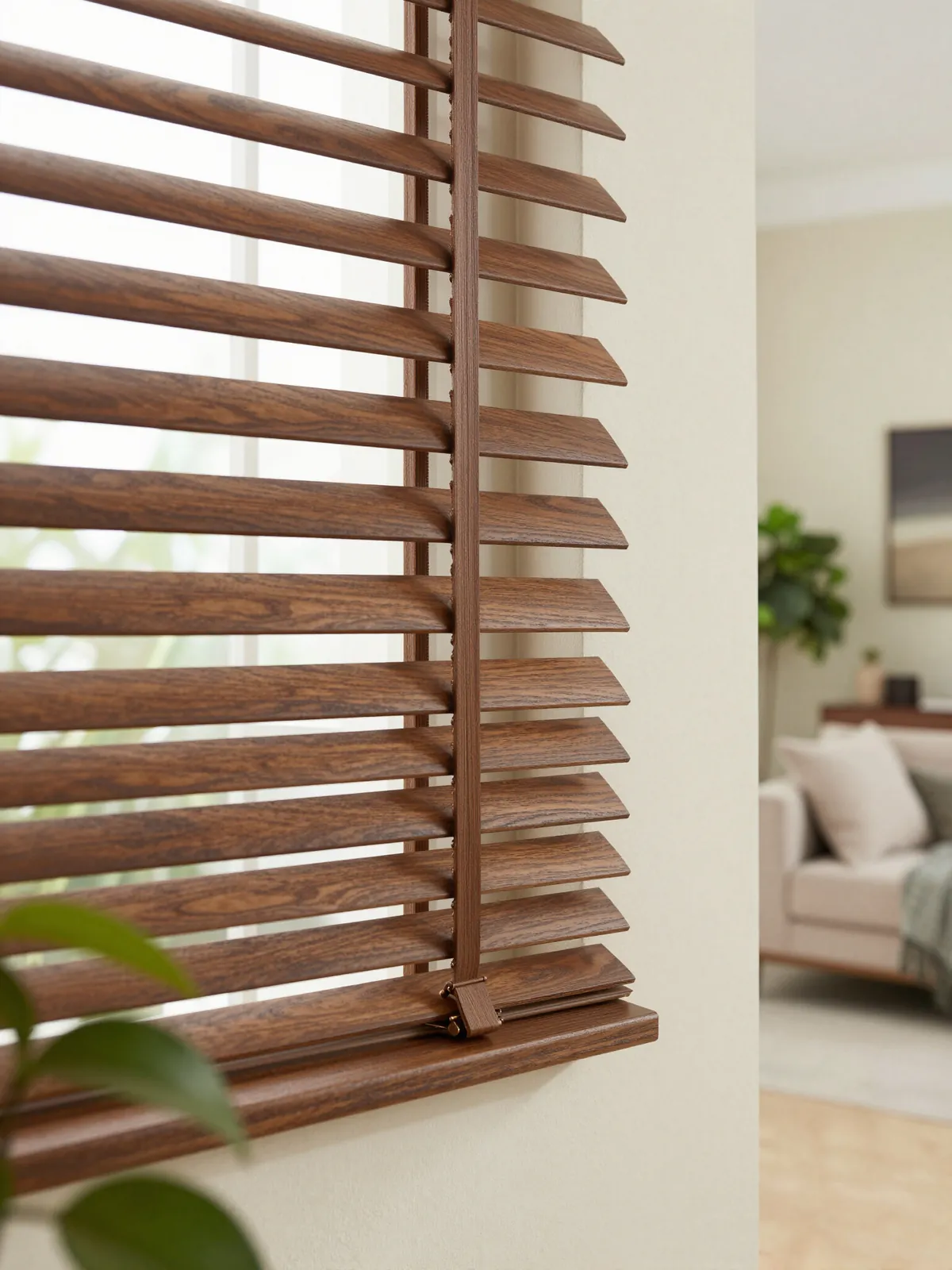
Natural wood blinds suit the broad windows of a colonial and the stained woodwork of many Victorian rooms. On very tall sashes we weigh their heft against a lighter option.
Cellular shades
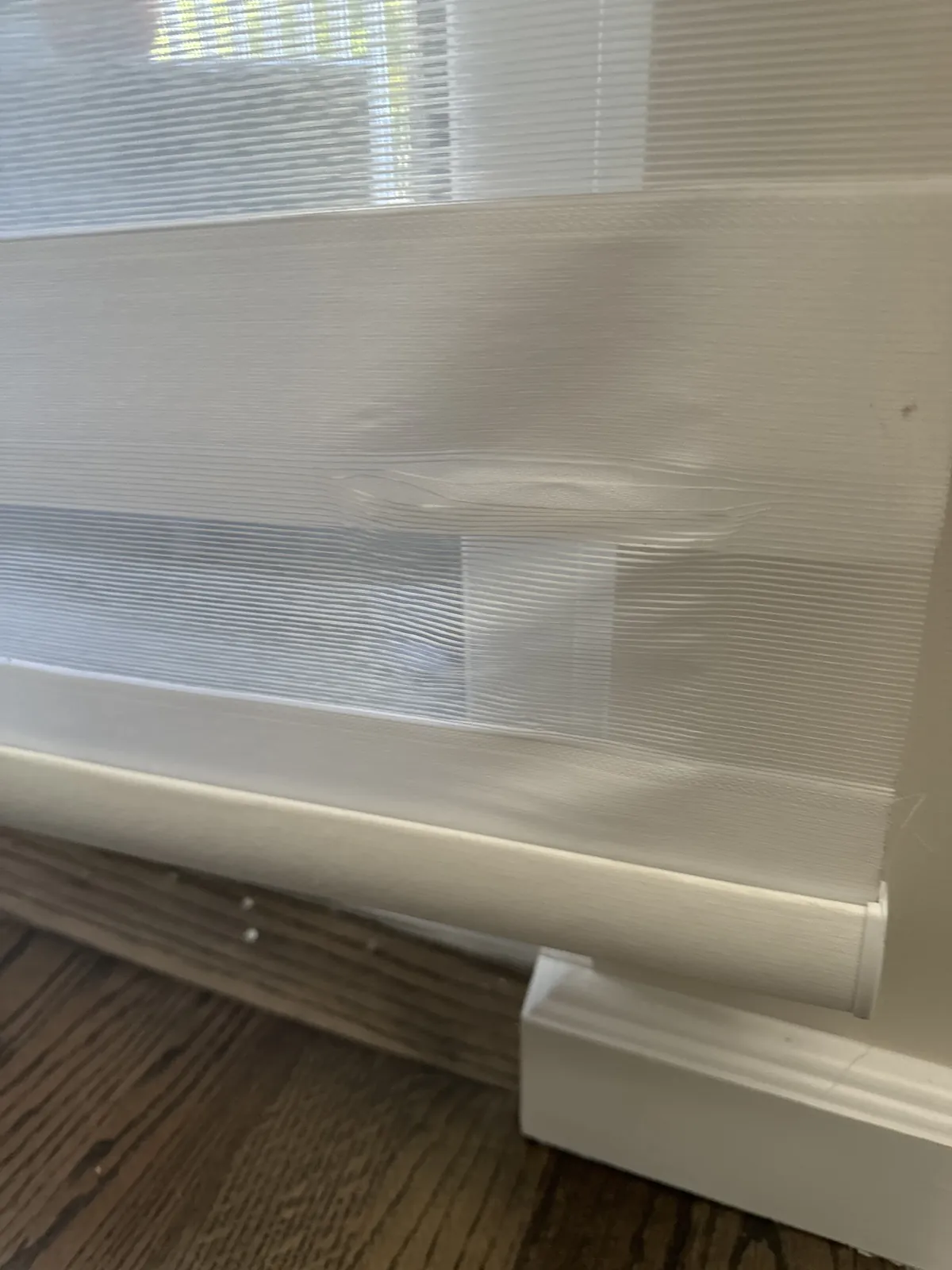
Cellular shades are light to lift and fold up into a slim stack, so a tall window keeps most of its glass when they are raised. Their cells also add a layer at older glass.

Roller shades
Roller shades roll up tight into a narrow headrail, which suits shallow frames, slim bay posts and windows where you want the old trim to show.
Shutters
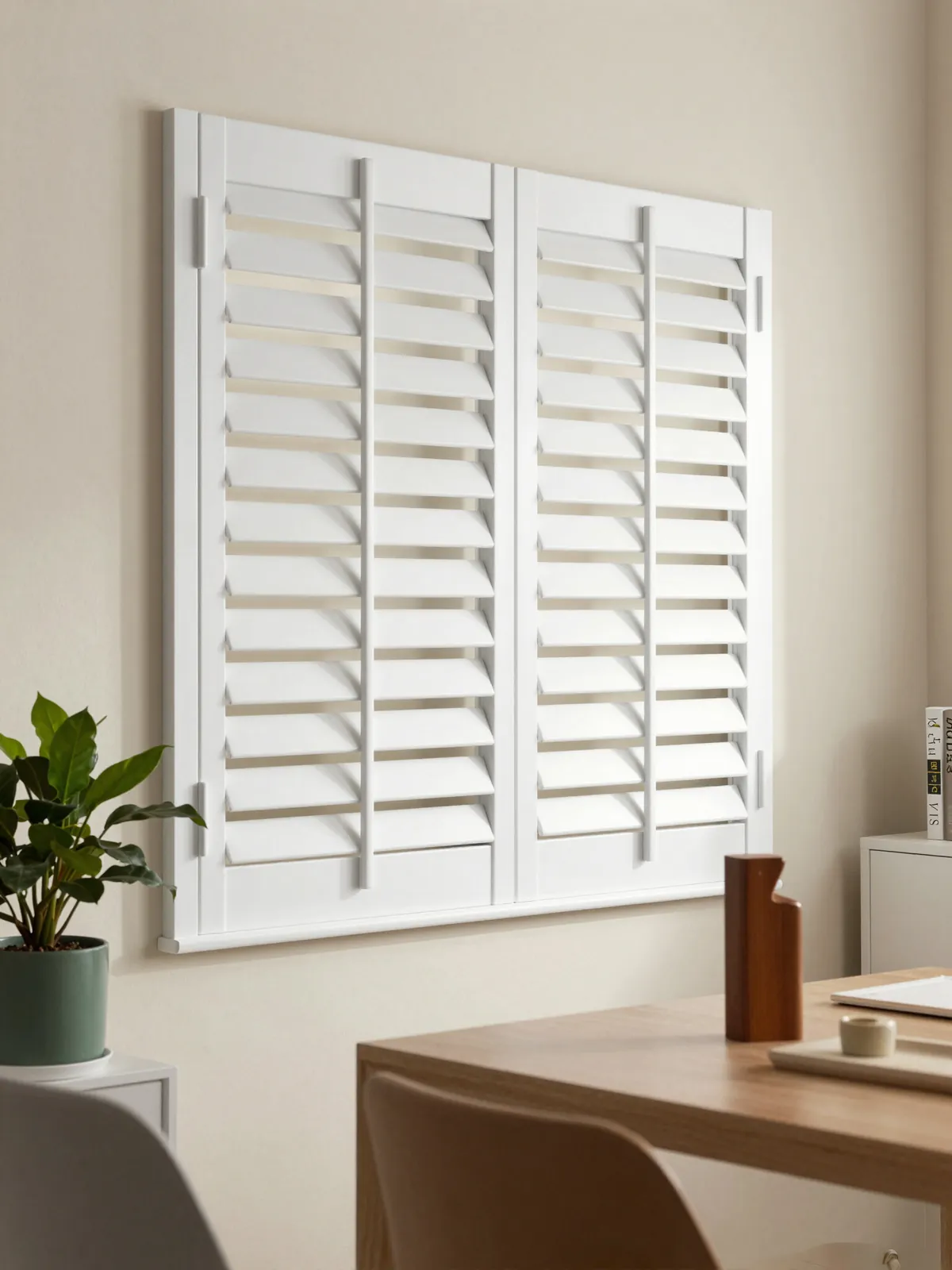
Each shutter is built to its opening and becomes part of the room. They work well in a box bay or on the formal windows of a colonial dining room.
Sizing blinds for bays and tall sashes
Getting a custom blind right is mostly about the visit before anything is ordered. In an older Newton house, that visit covers more than width and height.
The bay, section by section
At a bay, we measure each section on its own, then look at how the sections meet. We note the angle at each corner, the width of the posts between the sashes, and how deep each frame is. A headrail needs room to sit inside its own frame without running into its neighbor at the corner, and on a curved bay with slim posts there is not much room to spare. Those notes decide which products can work in that bay and which mount they need. Sometimes the best answer for a bay is a shade on each section plus drapery across the whole opening, and we can plan both at once.
Stack height on a tall window
When a blind is raised, it does not disappear. It piles up at the top of the window in what is called the stack. On a tall sash, a wood blind’s stack can be deep enough to cover a good part of the upper glass, which hides the very height that makes the window handsome. Cellular and roller shades fold or roll into a much smaller stack. Another answer is to mount the blind above the window frame, so the stack sits on the wall and the glass stays clear. We look at the stack on every tall window and show you the difference before you decide.
Weight and the daily lift
A large blind is heavier to raise than a small one, and on a tall sash you feel that every morning. We think about how often each blind will be lifted and who will lift it. Lighter fabric, a lift mechanism matched to the blind’s size, or a motor each solve it differently. For a window over a stair or behind a deep window seat, motorizing often makes the most sense, since the window is awkward to reach at all.
Old sash details
Older double-hung windows carry hardware that a blind has to work around: sash locks in the middle, lifts on the lower sash, and sometimes the pulley covers of the original sash weights at the sides of the frame. We note where each of those sits, because a blind mounted inside the frame has to clear them, and a bottom rail that lands on a sash lock will never sit flat. We measure each frame at several points, check whether it is square, and recommend an inside or outside mount for that window alone.
Deep sills and window seats
Many Victorians and colonials have deep sills, and some bays have built-in window seats. A blind that drops onto a deep sill looks finished. One that has to stop above a cushioned seat needs its length set to the seat, not the sill. We ask how you use each seat, if you sit there to read or keep plants on the sill, and size the blind to suit. A window seat in a bay also changes how you reach the blinds. Leaning across cushions to pull a cord is awkward, so seats are one of the places where an easy lift or a motor earns its place. We also check that a lowered blind will not trap heat against a radiator tucked under the seat, which is common in older houses.
Fitting the blinds
We handle the installation as well as the measuring. When your blinds are ready we come back, fit each one, level it against frames that may not be level themselves, and test that it lifts, lowers and tilts smoothly. We show you how each product works before we leave. If you are planning trim painting or new windows, have that done before the measuring visit. The craft behind it is explained on the measuring and installation page.
Starting in our Natick store or at your Newton door
Most projects use both. Seeing the range in one place helps you narrow the choices, and seeing samples at your own windows settles them.
What you can try in the showroom
In our downtown Natick store, samples of each kind of blind and shade hang ready to try. You can raise a cellular shade and look at its stack, tilt a run of wood slats, and swing a shutter panel open. The store also carries Benjamin Moore colors, wallpaper and fabric, so you can hold a blind sample against the paint or paper you are thinking about. The showroom page lists directions and when we are open.
A free visit to your house
Bays and tall sashes are hard to picture from a store. At a free in-home consultation we bring the samples to your rooms, look at the bays and tall windows with you, and talk through stack, lift and mount on the windows themselves. The visit can cover one room or the whole house. For a longer description of what it involves, read about the in-home design consultation.
Blinds in older rooms, room by room
Parlors and living rooms with a bay. Fitted shades on each section keep the bay tidy and leave the trim on show. If the room has drapery, the shades handle light and privacy while the drapery frames the whole bay.
Libraries and studies. Dark-stained woodwork suits wood blinds in a matching stain. Tilting the slats upward fills a high ceiling with soft light and keeps glare off a desk or a screen.
Back stairs and pantries. Older houses often have small, narrow windows in service areas that are easy to overlook. A slim roller shade covers them neatly and costs the room no space.
Children’s rooms. Darkness for naps and bedtime, and cords kept well out of reach. Room-darkening cellular shades and motorized options both suit these rooms, and an outside mount stops light leaking at the edges.
Former bedrooms turned into offices. Glare on a screen is the main problem. A light-filtering shade or a wood blind tilted to send light upward keeps the view and spares your eyes.
Third-floor rooms. Under the roof of a Victorian or a big colonial, windows are often small and set into dormers or knee walls. Shallow frames suit roller and cellular shades with slim headrails.
Keeping a bay consistent with the rest of the house
A bay is usually the feature of the room, and often of the whole front of the house. Its blinds set the tone for every other window. If the bay has white cellular shades, the windows on either side and the rooms above usually look best with the same color, even if they use a different product. We plan that across the house so the street sees a single, calm face while each room inside gets the blind it needs.
When you inherit blinds with the house
Older Newton houses often come with blinds chosen by a previous owner. Some are worth keeping, some are worn out, and some never fit well in the first place. Walk us round what you have and we will say plainly which ones are worth keeping. A blind that only has a broken cord or a tired lift may be repairable; our blind repair in Newton page explains how that works. For the rest, we can measure and make new ones that sit well beside the keepers.
Colors and finishes for period rooms
Victorian rooms often carry dark woodwork, heritage paint colors or patterned wallpaper, and a stark white blind can look out of place against them. We bring stain and fabric samples to hold up to your trim, so you can see which ones settle into the room. Off-whites, warm neutrals and wood tones pulled from the existing woodwork tend to sit more quietly in an older house. If the walls are being papered or painted at the same time, choosing the blind alongside them saves a second round of decisions; see wallpaper in Newton and Benjamin Moore paint in Newton for those lines.
Cords, children and pets
Older blinds often have long loops of cord hanging beside the window, and those loops are a real risk where small children or pets live. Choosing new blinds is a good moment to remove that risk. Motorized shades take the cords away entirely, and on every other window we pick a lift that keeps cords short and out of reach. Mention on the visit which rooms the children sleep and play in, and where the dog likes to watch the street, and those windows get planned first.
Paired windows in a large colonial
Big colonials often group their windows: a pair of sashes side by side in a dining room, or a wider group across a family room wall, separated only by narrow mullions. There are two ways to dress them. A separate blind on each sash lets you raise one and leave its neighbor down, and keeps the mullions visible. A single wide blind across the whole group gives a cleaner line and fewer headrails, but it lifts as one and hides the mullions when lowered. Neither is right everywhere. In a room where light comes from one side at a time, separate blinds usually work better; in a room you open and close all at once, a single wide blind is simpler. We look at the group with you and talk through both before anything is measured for the order.
Light gaps and when they matter
Any blind mounted inside a frame leaves a small gap at each side, because it needs room to move. In most rooms that sliver of light goes unnoticed. In a bedroom where you want real darkness, or a media room, it shows. An outside mount, with the blind set on the trim and overlapping the opening, closes those gaps and blocks far more light at the edges. In an older house with fine trim, that trade-off is worth thinking through room by room: show the casing in the parlor, cover it in the bedroom. We point out where gaps will show when we measure, so the choice is yours rather than a surprise on fitting day.
A plan for the whole house, done in stages
A large older house rarely gets every blind at once. We can measure and plan the whole house in a single visit, so every room has the same street face and finishes, and then make and fit them in whatever order suits you, floor by floor or room by room. When you are ready for the next part, the plan is already in hand. If you would like the full range of window treatments rather than blinds alone, our window treatments in Newton page covers drapery, shutters and more.
Custom blind questions from Newton
Do you make custom blinds for homes across Newton?
Yes. We visit houses in every Newton village for free in-home consultations, measure each window, and come back to install the finished blinds and shades. You are welcome to see the range at our Natick showroom first.
Can you fit blinds to a curved or angled bay?
Yes, in most bays. Each section is measured and made on its own, sized to clear its neighbors at the corners. Where the posts between sections are very slim, a roller or cellular shade with a narrow headrail usually fits best.
Why does a raised blind cover the top of my tall windows?
That is the stack, the blind piled up at the top when it is raised. Cellular and roller shades stack much smaller than wood blinds, and mounting the blind above the frame can lift the stack clear of the glass altogether.
Are wood blinds too heavy for very tall sashes?
They can be hard work on the tallest windows. We look at each one and may steer you toward a fabric shade or a motor on those, while keeping wood blinds on the windows where they suit.
Book a free Newton blind consultation
Start with a free in-home visit. Request one through our contact page, or press the call button to speak with us, and we will bring samples to your windows. The whole blind and shade range is on our custom blinds page, and our Newton page lists our other work there.